

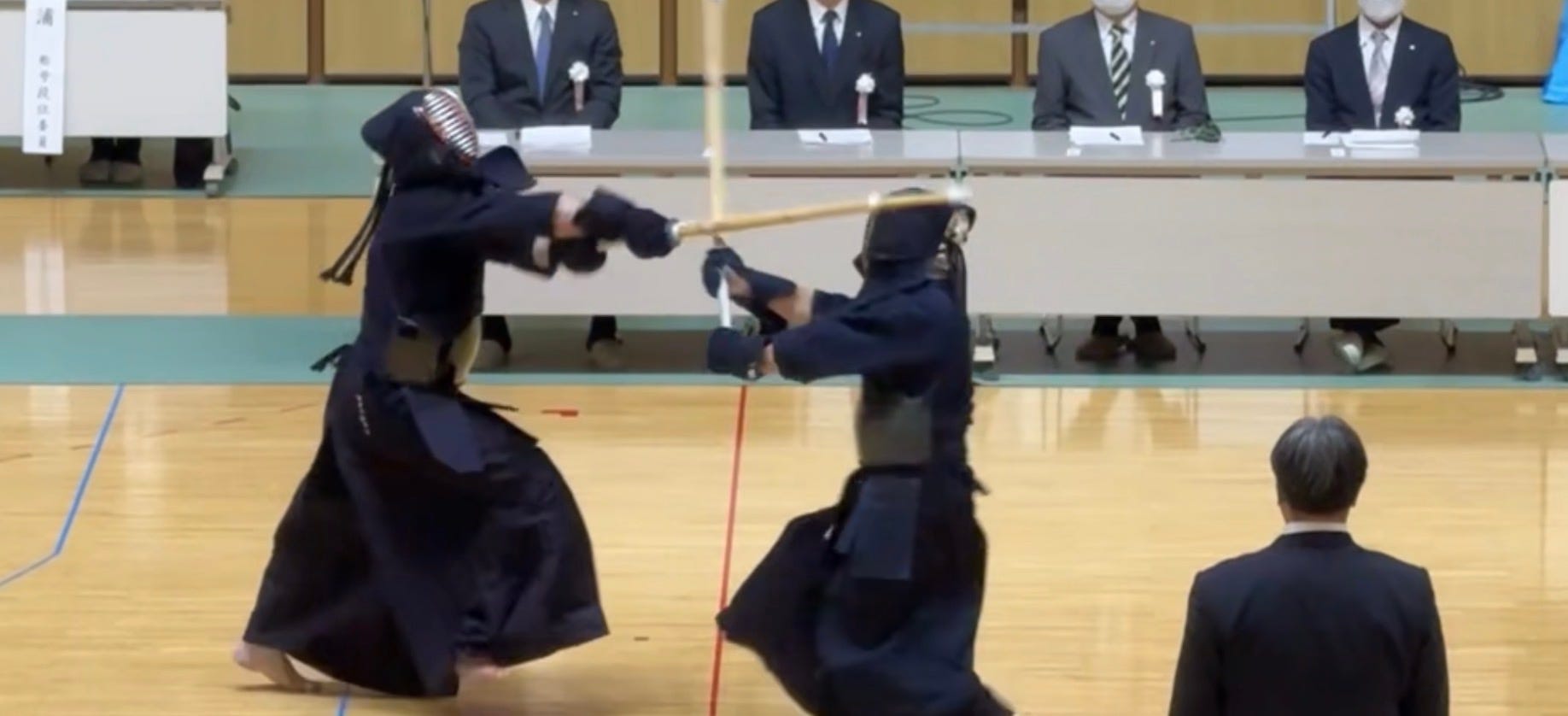
One comment seems to come up surprisingly often whenever grading is discussed. It usually comes from people who have recently started Kendo, although sometimes it’s from Kendoka who have been practising for years. It almost always amounts to the same thing.
“I’m not really interested in grading. I just want to do Kendo.”
Everyone is free to enjoy Kendo in whatever way they choose, and if somebody simply enjoys turning up to Keiko every week, then that’s entirely their decision.
At the same time, I can’t help wondering where my own Kendo would be today if I’d made that same choice.
The more I think about it, the more convinced I become that grading has played a much larger role in my development than I realised at the time. Not because of the certificates, and certainly not because of the grade itself, but because each stage of the grading process gradually changed the way I thought about Kendo.

Recently, my friend Jindřich Ziegelheim published a book called Kendo, the Intersection of Three Rings. It struck a chord with me because it gave a simple way of expressing something I’d been thinking about for a long time. I’ve often described Keiko, Shiai and Shinsa as the three ‘pillars’ of Kendo. Jindřich describes them as three rings, but the idea is essentially the same. They aren’t separate activities that we can choose between depending on our interests. They support one another, and each develops something that the others cannot.
Keiko develops our technique and our habits. Shiai tests those techniques under pressure and teaches us lessons that ordinary practice often cannot. Shinsa, however, asks something slightly different. It asks whether our Kendo itself is moving in the right direction.
That distinction has become more important to me as I’ve grown older.
One thing that I think is often misunderstood, particularly outside Japan, is the purpose of grading itself. Grades are sometimes treated as though they are a measure of status or authority, something that establishes where somebody sits in the hierarchy of Kendo.
In Japan, at least in my experience, people are less inclined to mention what grade they are. Unless somebody is 8th Dan, it simply isn’t something that comes up in conversation very often. People don’t tend to introduce themselves by saying they’re 6th Dan or 7th Dan. The grade isn’t treated as an identity. It’s simply where that person happens to be on their personal journey at that moment.
I’ve increasingly come to think that grades are much closer to school years than they are to ranks.
If somebody remained in the same year at school for the rest of their life, they might continue learning. They might read books, study independently and become knowledgeable in many areas. At some point, however, they would inevitably reach the limits of what that stage of education was designed to teach them. It’s a crude analogy, but I think it has some truth to it. Progress requires moving on, not because the title changes, but because the nature of what you’re trying to learn changes.
Looking back at my own journey, I can clearly remember periods where my understanding of Kendo was much less mature than I believed it to be at the time.
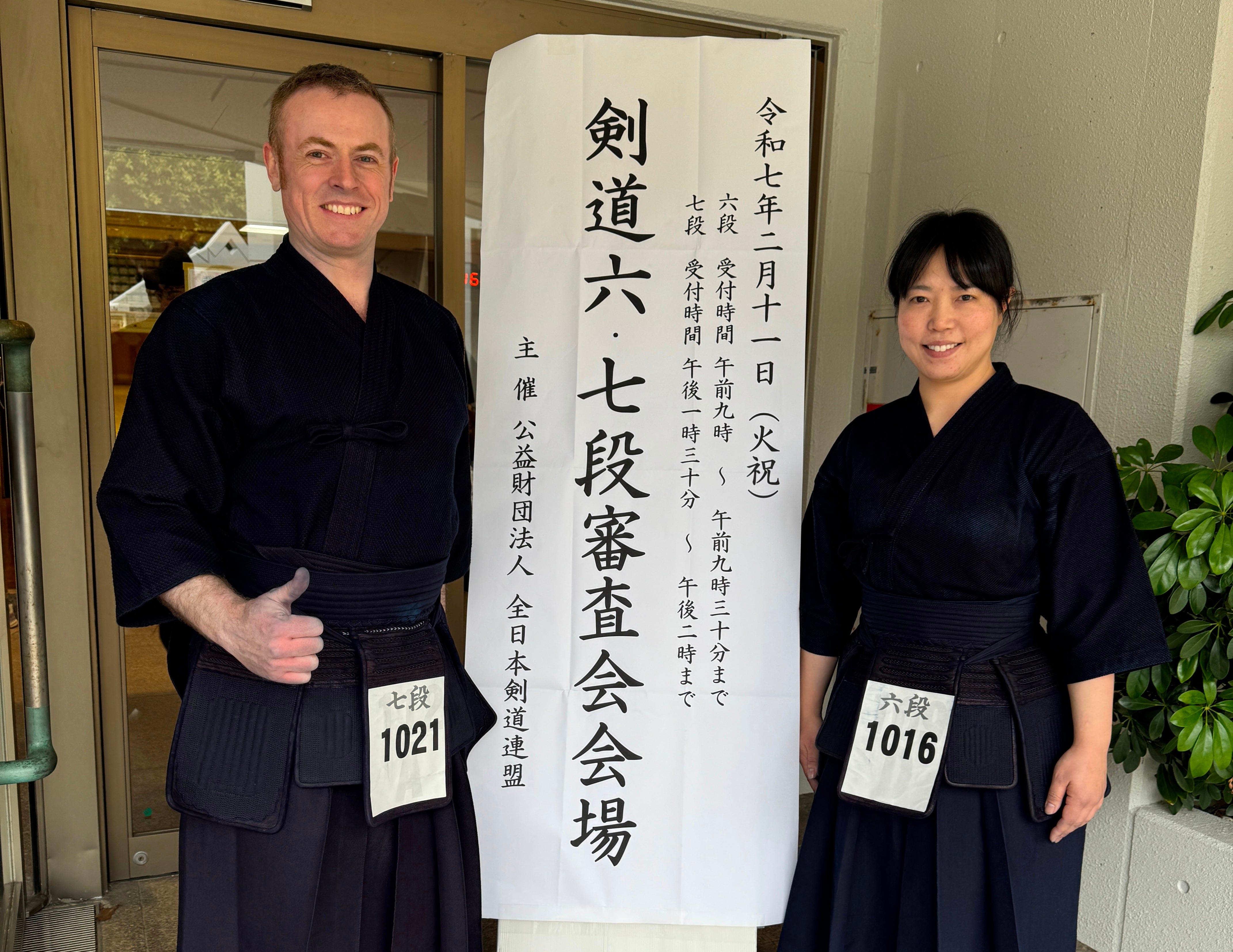
Like many people, I went through a stage where I thought I understood far more than I actually did. I remember being a relatively young 4th Dan and arrogantly thinking that I was probably capable of passing 6th Dan already. Looking back now, that thought makes me cringe. It wasn’t simply that I wasn’t ready. The bigger problem was that I didn’t even understand what 6th Dan Kendo actually was.
Passing 5th Dan didn’t suddenly answer that question. In fact, it probably created more questions than answers - which is exactly the point at hand. In other words it forced a change the direction of my practice. Over the following years I found myself paying attention to different things. The interactions with my partner became more important than the techniques themselves. My understanding of Seme began to develop. The questions I asked myself after Keiko became different.
None of those changes happened overnight - and they would not have happened at all if I hadn’t put myself through the 5th Dan exam. There wasn’t a single dramatic revelation. The changes accumulated slowly over several years until eventually I found myself approaching practice in a completely different way from before.
Only then did I begin to feel that I understood, however imperfectly, what I was actually trying to achieve as I prepared to challenge 6th Dan.
When I eventually passed that examination, I experienced something rather familiar.
For a brief moment there was satisfaction, of course, but that very quickly gave way to the same feeling that I had experienced before.
I realised I had absolutely no idea what 7th Dan Kendo looked like.
The whole process began again.

Over the years that followed, little pieces gradually started falling into place. Sometimes it came from conversations with senior Sensei. Sometimes from a particular Keiko that felt different. Occasionally it was simply an idea that appeared while driving home after practice. Eventually I built up a picture in my own mind of what I believed I should be aiming for.
Whether that picture was correct or not could only really be answered in the examination itself.
Fortunately, it turned out that I was moving in roughly the right direction.
What strikes me now is that none of those realisations would have happened if I had simply decided, years earlier, that grading wasn’t for me. I would almost certainly still have been practising. I would probably still have enjoyed Kendo just as much.
However, I’m simply not convinced that my Kendo would have continued developing in the same direction.
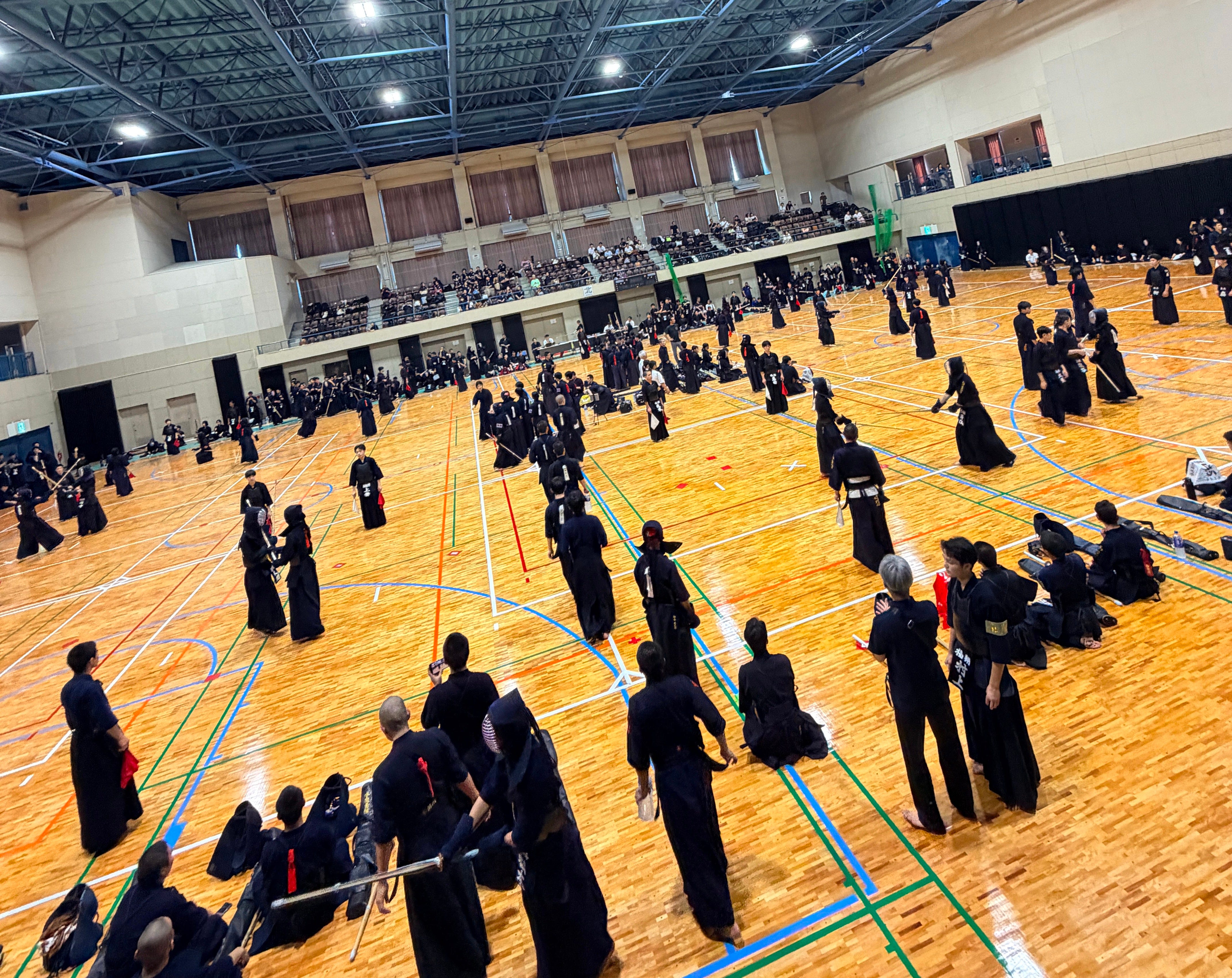
This became particularly clear to me a few days ago, while watching a large practice tournament for Japanese high school students in Kumamoto.
The standard was exceptionally high. Many of these students have already spent well over a decade practising Kendo, and their technical ability is remarkable. Their Kihon is polished, they’re fast, committed and extremely capable competitors.
Yet what was equally striking was that, despite all those hours of practice, most of them were still very much doing the Kendo of their stage in the grading system - around 2nd or 3rd Dan. They possessed excellent technical foundations, but the qualities expected later, the deeper application of techniques, the interaction with the opponent, what grading criteria describe as Ōyō, had not yet fully developed.
That isn’t a criticism, it’s exactly as it should be.
Those things don’t simply appear because enough hours have been spent in the dojo. They develop because our practice gradually changes direction as we move through the different stages of Kendo.
For me, that’s what grading has always provided.
Not a certificate or status, but direction.
Perhaps the most valuable part of the process is that every grading eventually leaves you feeling like a beginner again.
I’ve now been 7th Dan for a little over a year. Given the low pass rate of the 8th Dan exam, many people would probably consider that the end of the journey.
I don’t feel that way at all. If anything, I feel much as I did after passing 6th Dan.
I genuinely don’t know what 8th Dan Kendo is or is supposed to be.
At the moment, I don’t really know what I need to become to even begin to think about challenging the test when my time eventually comes.
But that uncertainty doesn’t discourage me. If anything, it motivates me.
Looking back over the last twenty five years, every meaningful step forward in my Kendo began with exactly that feeling.
Perhaps that’s the real purpose of grading. It doesn’t tell us how good we are. It simply points us towards the next question we need to spend the next few years trying to answer.
You can also follow my activities on my YouTube Channel, where amongst other things, I post a regular show answering questions from the audience about a wide array of Kendo related topics.
Thoughtful point, Andy. Thanks for sharing.
I also think that grading marks an important milestone in our kendo journey. Whatever our motivation or implication might be, the result of a grading test is never taken for granted and therefore challenges one’s ability to test our spirit and confront our fears, which is, I guess, part of our martial journey.
Spot on. This reminded me of Hyakuren Jitoku (百錬自得) which I had noted in a previous article. Shinsa provides the direction; years of keiko provide the understanding. And yes, one sets the course, the other transforms us.